
Running on Fumes
Your dashboard says 18 miles to empty. The nearest gas station is only nine miles away. That sounds manageable, until the number starts dropping faster than the miles you’re covering. Running out of fuel on a busy highway is an unpleasant way to discover that your dashboard estimate was a little optimistic. Fortunately, I-35 fuel delivery can bring gasoline directly to stranded motorists. The problem is that many drivers treat the estimated range as a countdown. It isn’t quite that simple.
Your Dashboard Is Doing Some Guesswork
Modern vehicles calculate remaining range using fuel levels and estimated consumption. The computer considers recent driving conditions, which means the displayed number can change as you drive. Heavy traffic, frequent acceleration, and running the air conditioning all consume fuel. A car that estimated 25 remaining miles during steady cruising may revise that figure after sitting in Austin traffic.
The low-fuel warning light isn’t an exact measurement either. Different manufacturers set different thresholds, and the remaining reserve varies by vehicle. Waiting until the display reaches zero is a gamble.
What Happens When Your Car Finally Runs Dry?
Your car may hesitate, lose acceleration, or begin sputtering as the engine struggles to receive fuel. Eventually, the engine can stall completely, leaving you with reduced steering assistance and limited braking assistance. If you notice these symptoms, move toward a safe stopping location while the vehicle still has power. Once stopped, avoid repeatedly cranking the engine.
The Shoulder Is No Place for Experimenting
On I-35, a disabled vehicle can be dangerously close to fast-moving traffic. Get as far from the travel lanes as possible, activate your hazard lights, and assess whether remaining inside is safer. Don’t attempt to walk along the highway to buy gasoline.
If your vehicle is blocking a traffic lane or you’re in immediate danger, call 911.
Tell Dispatch Where You Actually Are
Arranging fuel delivery on I-35 is easier when dispatch has an accurate location. The interstate runs through several communities, and knowing that you’re somewhere south of Austin leaves plenty of ground to cover.
Before requesting assistance, gather:
- Direction of travel: Northbound or southbound.
- Nearest exit: Include the exit number or nearby mile marker.
- Fuel type: Regular, premium, or diesel.
- Vehicle position: Shoulder, ramp, or another location.
For roadside gas delivery on I-35, sharing your phone’s location can help, although the direction of travel remains useful information.
A Few Gallons Can Get You Moving Again
The purpose of I-35 emergency fuel service is generally to provide enough gasoline or diesel to reach a nearby filling station. You can then fill the tank properly and continue your journey.
Most gasoline-powered vehicles should restart after refueling, although a completely empty system may require a few attempts following the manufacturer’s instructions. Diesel vehicles sometimes need additional priming procedures.
If fuel delivery around Austin doesn’t resolve the issue, the problem may involve the fuel pump, electrical system, or another mechanical component. At that point, further assistance or towing may be necessary.
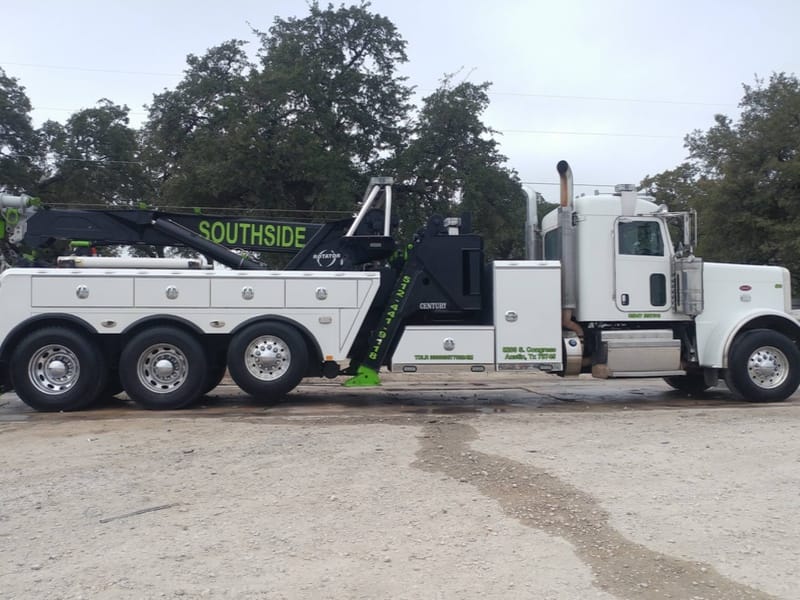
Southside Wrecker: Fuel Delivery for Austin Drivers
Southside Wrecker & Heavy Duty Semi Truck Towing has served the Austin area since the 1970s. Our company handles towing, recovery, and 24-hour roadside assistance, including fuel delivery. We believe in giving customers realistic arrival estimates, fair pricing, and careful attention to each job. Our team knows the local road network, including I-35, MoPac, and Highway 183.
If you’re looking for I-35 fuel delivery near Austin, call us with your location and the fuel your vehicle requires. We’ll discuss the situation and available assistance.

FAQs
How accurate is the miles-to-empty display?
It’s an estimate based on fuel level and driving conditions. Changes in speed, traffic, and fuel consumption can affect the displayed range.
Does using air conditioning make you run out of gas faster?
Air conditioning adds an engine load in conventional gasoline vehicles, increasing fuel consumption. The impact varies with driving conditions and vehicle design.
Can driving with an almost empty tank damage the fuel pump?
Repeatedly driving with very low fuel can contribute to fuel pump wear because fuel helps cool and lubricate many in-tank pumps.
Can roadside assistance deliver premium gasoline?
Some providers can supply premium gasoline, but availability varies. Tell dispatch the fuel grade required by your vehicle.
Is it safe to walk to a gas station from the highway?
Walking beside an interstate exposes you to passing traffic and should be avoided. Request roadside assistance instead.
What if my vehicle won’t start after receiving fuel?
Follow the manufacturer’s restart instructions. If it still won’t start, the vehicle may need a mechanical inspection or towing.