
Rubber Gone, Wrecker On
A tire call on I-35 near Austin can sound simple over the phone. Driver has a blown drive tire, traffic is stacking up, and a service truck seems like the next step. Then we get there and see a torn air line, bent bracket, rubber wrapped around the axle, and a rim that has already been chewed up. And just like that, Austin semi towing becomes the right call.
A blown tire on a loaded vehicle throws more than rubber. At highway speed, tread can hit brake chambers, ABS wiring, mudflap hangers, light wiring, suspension parts, and fuel tank guards. A tire change only helps if the rest of the truck can still roll, steer, and stop the way it should.
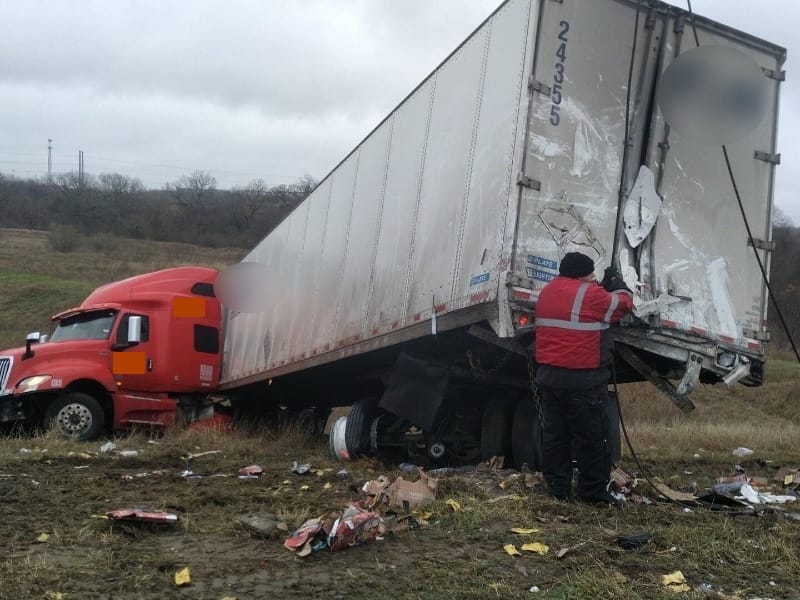
The Problem Is Usually Under the Surface
The first thing we look at is what the tire hit after it failed. A clean blowout leaves a mess on the shoulder, but the truck still holds air and the wheel area stays clear. That kind of call may need a tire tech, traffic awareness, and a little patience.
The harder calls look different. Rubber gets twisted into the axle. A loose mudflap bracket rubs against the wheel. A brake line leaks air fast enough that the truck will not release the brakes. We have seen drivers near US 183 think they could creep to the next exit, then stop again with a locked wheel and a worse repair bill.
Why a Tire Swap May Not Fix It
A service truck needs room to work. That means solid ground for the jack, enough shoulder width, and a truck that will be ready to move after the tire goes on. On a wide shoulder off SH 130, that can work fine.
Near downtown ramps, construction zones, or tight spots on I-35, the shoulder may not give anyone enough room. If the tire failure damaged the air system or steering, the new tire does not solve the real issue. That is the point where we keep the truck from grinding itself into a bigger problem.
The Tow Decision Comes Down to What Still Works
Before we hook up, we want to know what still functions. Can the truck build air? Do the brakes release? Is the rim straight enough to roll? Can the driver steer without metal rubbing? Those answers tell us if we need to move the tractor, the trailer, or the full combination.
A few details matter right away:
- Which tire failed
- What parts are hanging loose
- If the trailer is loaded
- If the truck is blocking a lane
- Where the fleet wants the unit taken
- If another tractor is coming for the trailer
A tire failure near Austin during afternoon traffic can turn ugly fast. Austin semi towing is often less about the tire itself and more about getting the disabled rig out of a bad spot before traffic, heat, and damage make the call harder.
Loaded Trailers Change the Move
An empty trailer gives us more choices, but a loaded reefer, tanker, flatbed, or sealed trailer narrows the plan fast. Freight may need to keep moving, or the fleet may need the whole unit taken to a shop before anyone breaks the set.
That is why Austin semi towing after tire damage starts with the load as much as the truck. If the tractor cannot move but the trailer is fine, a swap may make sense. If the trailer brakes or air lines took damage too, Austin semi towing may involve moving the whole combination together.
Southside Wrecker Handles Austin Semi Towing When Tire Damage Spreads
Southside Wrecker has handled heavy towing and recovery work in the Austin area since the 1970s. Our fleet includes 50-ton rotators, a 65-ton rotator, a 50-ton straight stick, 25-ton trucks, and tractors set up for towing and hauling. That range helps our Austin semi towing team respond when a tire failure turns into brake damage, air loss, suspension trouble, or a disabled tractor-trailer.
We also pay close attention to who we send on these calls. Heavy-duty operators train with experienced drivers and spend time learning how trucks are built, from axles and brakes to weight transfer during hookup. On Austin semi towing calls near I-35, MoPac, SH 71, and US 183, the best move is usually the one that protects the truck from more damage while getting it out of traffic.
FAQs
Can a semi tire blowout damage the air brakes?
Yes. Shredded rubber can tear air lines, fittings, brake chambers, and nearby hoses. If the truck loses air pressure, the brakes may not release correctly.
When is a mobile tire repair not enough?
Mobile tire repair may not be enough if the rim is bent, brakes are damaged, steering is affected, or parts are dragging. The truck may need to be moved before repairs start.
Why should a driver stop after a tire comes apart?
Driving on loose rubber or a damaged rim can make the repair worse fast. It can damage hubs, drums, wiring, suspension parts, and body panels.
Can a loaded trailer make towing harder?
Yes. A loaded trailer adds weight and can limit how the tractor and trailer are moved. The load type may also affect the destination.
What should dispatch ask after a semi tire failure?
Dispatch should ask which tire failed, what damage is visible, whether the truck holds air, and whether the trailer is loaded. Photos help the crew prepare.
Can a truck be towed if the damaged wheel will not roll?
Yes. The towing crew may need to lift the damaged axle, move the tractor separately, or use a different hookup. The plan depends on the damage and road position.