Highway Heavy-Duty Work: High Stakes
The stretch of road determines as much about a towing call as the vehicle itself. On an active interstate, the first job is scene management, not recovery. Our Lockhart towing team handles heavy-duty calls in both environments, and each road type calls for a completely different approach.
Highway heavy-duty calls create immediate exposure to live traffic. Warning lights deploy first. The recovery truck positions as a barrier before any rigging begins. Commercial truck incidents on active corridors can involve jackknifed semis, rolled loads, and off-road embankment recoveries. All of that work happens with traffic moving just feet away from the crew.
What Heavy Recovery Equipment Demands on an Active Corridor
Rotators, 50-ton straight sticks, and extended boom configurations are the tools highway heavy-duty calls require. A jackknifed semi on a shoulder cannot be handled with standard equipment. The right rig has to arrive on the first trip. Rigging placement on a live corridor requires careful setup. Pull angle, anchor points, and load direction all have to be confirmed before extraction begins.
What a Car in a Downtown Loading Zone Tells a Heavy Crew
A car tow in town is not the same job as a semi recovery in a commercial district. Our Lockhart towing operators assess overhead clearance, intersection geometry, and staging space on every city call. A tight loading dock in a commercial zone calls for a very different setup than an open highway shoulder. Heavy equipment on a narrow block demands a slower, more deliberate execution.
City and In-Town Heavy Work: Space Becomes the Main Variable
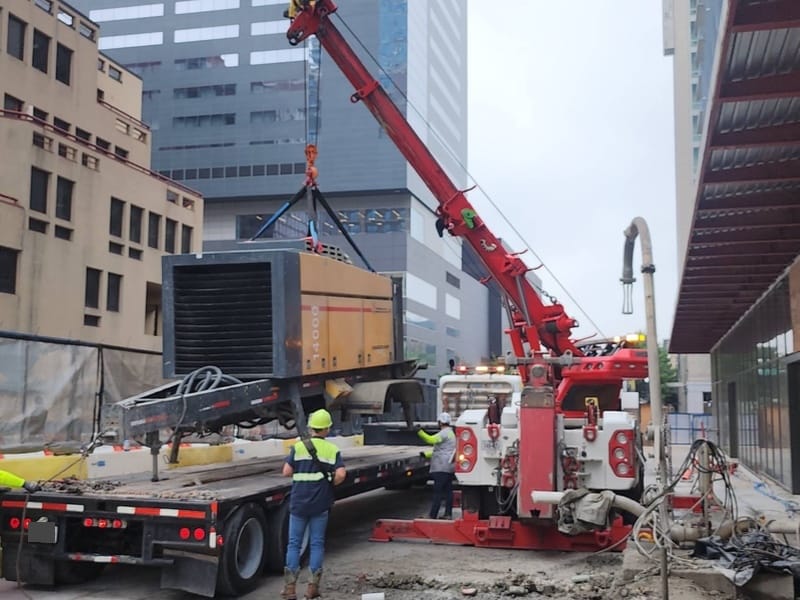
Urban and commercial towing calls trade highway risk for geometry. Overhead utilities, narrow streets, parked vehicles, and building clearances all define the work zone. A 65-ton rotator on a downtown block has to be positioned very differently than on an open highway embankment. The crew reads the surroundings before deciding where to set up.
City calls generate a different set of dispatch questions. Road type, access, overhead restrictions, and traffic staging all have to be confirmed before the right unit is assigned. Matching the equipment to the environment is how our Lockhart towing dispatchers make sure the right truck arrives first.
How the Two Road Types Compare for Heavy-Duty Towing
Here is what each environment typically requires:
- Highway calls require full scene lighting and a protective barrier before any rigging begins
- Active corridor recoveries demand rotators and extended boom for commercial truck incidents
- Highway embankment work requires off-road rigging and pull angle confirmation before extraction
- City and urban calls require tight staging and overhead assessment before equipment is deployed
- Commercial zone recoveries need clearance reads and traffic staging before positioning begins
- Every Lockhart towing dispatch is confirmed against road type and access conditions before the unit rolls
Southside Wrecker: Lockhart Towing With Heavy-Duty Fleet Depth Since the 1970s
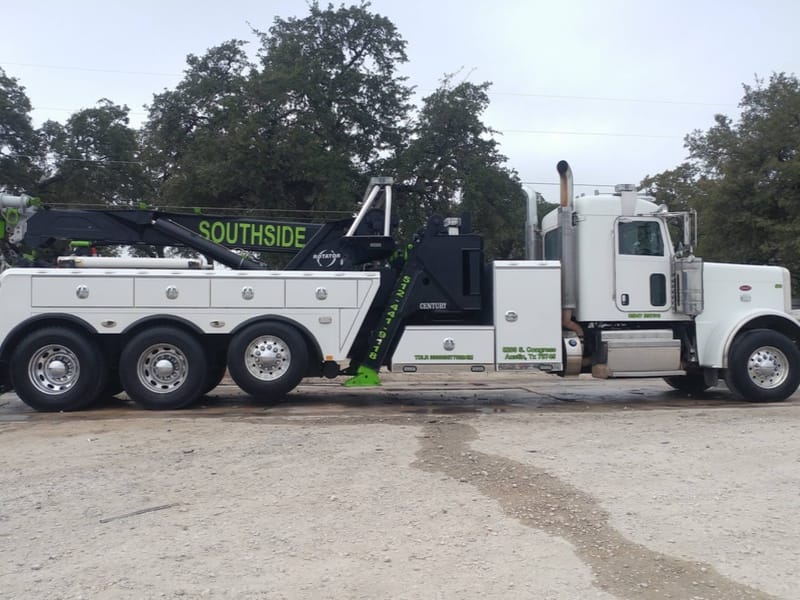
Southside Wrecker has operated since the 1970s with a focused purpose: heavy-duty towing and heavy-duty recovery done right. The fleet includes two 50-ton rotators, a 65-ton rotator, a 50-ton straight stick, and a range of 25-ton single-axle trucks. Every Lockhart towing call gets matched to the equipment it actually requires. Operators are evaluated alongside experienced heavy-duty drivers before taking the lead on complex recoveries. That training standard is what keeps the team ahead of calls that others cannot handle.
Quality and reliability define how Southside Wrecker runs. The team does not overextend on call volume. Each Lockhart towing job gets the full attention of the crew assigned to it. Lockhart towing calls have been handled this way for more than 50 years.
FAQ
What is a rotator tow truck and when is it used in heavy-duty recovery?
A rotator is a heavy-duty recovery truck with a boom that pivots a full 360 degrees. It is used when the stuck vehicle cannot be approached from a straight angle, when it has rolled or gone down an embankment, or when surrounding obstacles prevent standard wrecker alignment. The rotating boom allows the operator to apply lifting or pulling force from almost any position around the vehicle.
Why does a highway recovery require scene setup before any rigging begins?
On a highway shoulder, the tow truck is working within feet of live lanes moving at high speed. Deploying warning lights and positioning the truck as a barrier between the work zone and traffic creates a protected area for the operator and the vehicle being recovered. Without that setup, the crew is directly exposed to passing traffic for the entire job.
What is the difference between a 50-ton and a 25-ton wrecker on a recovery call?
The ton rating refers to the safe working load the equipment can handle. A 25-ton wrecker handles mid-size commercial vehicles and heavier passenger equipment. A 50-ton wrecker is built for fully loaded semis, large buses, and heavy construction equipment. Using a wrecker rated below the job’s load requirement creates rigging risk and can result in equipment failure during recovery.
Why does in-town heavy-duty towing require different planning than highway work?
City environments add overhead utilities, building clearances, narrow turning radii, and limited staging space that highway shoulders do not have. A rotator or extended boom rig has to be positioned at precise angles to work within those constraints without causing secondary damage. That planning takes more time upfront but protects the vehicle and the surrounding infrastructure during the job.
What does it mean for a towing company to not overextend its capacity?
An operation that manages call volume to stay within its equipment and crew capacity can give each job full attention. Companies that overextend accept more calls than they can handle well, which can lead to delayed response times, rushed work, or sending the wrong unit. Staying within capacity is a service quality decision, not just a business one.
How does driver training differ for heavy-duty vs. standard towing?
Heavy-duty towing requires mechanical knowledge of large commercial vehicles, rigging training for off-road and complex recoveries, and experience managing active highway scenes. New heavy-duty operators at many companies ride alongside experienced drivers before taking independent calls. That mentored phase builds judgment that classroom training alone cannot develop.