
The Blowout Nobody Sees Coming
At highway speeds, the tires on a loaded semi-truck bear weight and force that most drivers never think about until something goes wrong. When a tire fails at 70 miles per hour, control becomes difficult in a matter of seconds. In US-183 semi recovery calls that follow blowouts, the same story keeps coming up: the driver was caught off guard, or the situation escalated before they could react. Knowing what causes a blowout and how to respond in the first seconds is information every commercial driver on this corridor should have before it happens to them.
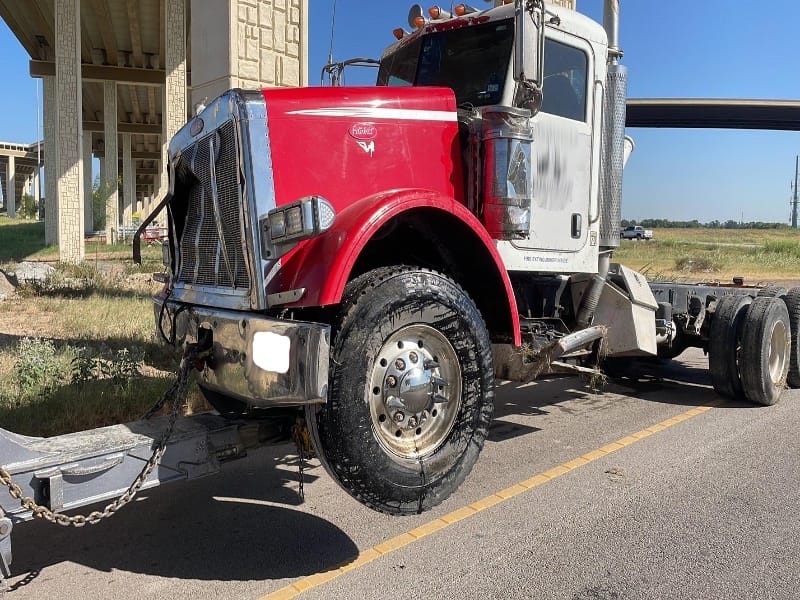
Why Blowouts Happen
Blowouts rarely arrive without warning signs, even if those signs go unnoticed. Most failures have a root cause that developed over miles of driving, not in a single moment. Heat, pressure, and wear are almost always part of the picture.
Under-Inflation and Heat Buildup
An under-inflated tire flexes more with every rotation, and that extra flex generates heat inside the sidewall. Over long stretches of highway driving, that heat accumulates until the internal structure of the tire begins to deteriorate. The rupture can come on quickly once internal temperature climbs past a threshold, and at highway speed there is very little time to prepare.
Debris, Age, and Overloading
Road debris often takes the blame for blowouts, but it is rarely the whole explanation. A tire in good condition at correct pressure can often survive a strike that would destroy a compromised one. Worn tread, rubber that has lost elasticity with age, and overloaded axles all reduce a tire’s margin for error. Any of those factors, alone or combined, raises the odds that the next rough patch or piece of debris finishes the job.
What to Do in the First Seconds
A blowout produces a loud bang and an immediate pull toward the affected side, and the urge to hit the brakes is one of the most dangerous things a driver can do in that moment. Here is what trained drivers and highway safety professionals consistently recommend:
- Hold the steering wheel firmly and keep the vehicle pointed straight
- Ease off the accelerator gradually, not all at once
- Resist the urge to brake until the truck has slowed significantly on its own
- Signal and ease toward the shoulder only once directional control is stable
- Stop fully before stepping out of the cab
- Stay in the cab with your seatbelt on and call for help
Momentum is your ally in those first moments, and the truck will slow on its own if you resist the instinct to overcorrect.
The Mistakes That Make It Worse
Overcorrecting the steering is the most common error drivers make in a blowout. The vehicle pulls hard toward the blown tire, and the reflex is to yank the wheel in the other direction. That move can cause the trailer to swing out, which creates a hazard far more serious than the blowout itself.
Braking hard is the second major error, and it often follows the first. Heavy braking into a blowout shifts weight forward and can lock the front wheels, making directional control worse at exactly the wrong moment. Drivers who end up stopped in an active travel lane rather than on the shoulder have made an already dangerous situation far harder to manage, and a US-183 semi recovery response is difficult enough without the rig sitting in moving traffic.
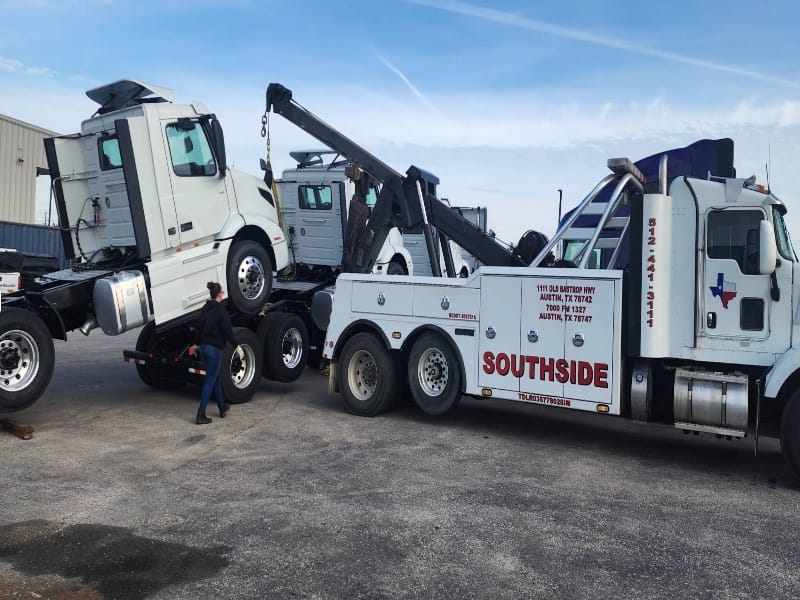
When a Blowout Brings Down a Rig, Southside Wrecker Runs US-183 Semi Recovery
Southside Wrecker provides US-183 semi recovery for blowout calls, rollovers, and highway breakdowns throughout this corridor. Our heavy duty towing crew arrives equipped for whatever the scene requires, from a straightforward tire situation to a full recovery of a loaded trailer that has gone off the road. We approach every US-183 semi recovery job as a controlled operation, because a rushed response at a highway breakdown creates new hazards.
Our equipment includes heavy rotators and the rigging to handle loaded commercial vehicles. If your rig is stopped on US-183, Southside Wrecker’s US-183 semi recovery team is the call that gets it handled properly. Every US-183 semi recovery situation is different, and we size up the scene before we start pulling. Reach out the moment the truck is down and we will be moving in your direction.
FAQ
How often should commercial truck tires be inspected?
Federal regulations require drivers to inspect their tires before every trip as part of a pre-trip inspection. Beyond that, most fleet safety guidelines recommend a thorough tire check every 10,000 to 15,000 miles, including tread depth, sidewall condition, and inflation pressure. Catching a problem early is far less costly than dealing with a failure on the road.
What is the difference between a blowout and a flat tire on a semi?
A flat tire loses pressure gradually, often through a slow leak, and the driver may not notice right away. A blowout is a sudden, violent rupture under pressure. Blowouts are more dangerous because the loss of control is immediate and the debris can create hazards for nearby vehicles on the road.
Can drivers feel a blowout coming before it happens?
Sometimes. An under-inflated tire can cause a subtle pull to one side or a sluggish, soft handling feel. Vibration from a worn or damaged tire is another warning sign. These signals are easy to dismiss on a long haul, which is why checking tire pressure before a run matters as much as it does.
Does a blowout on one tire affect the others?
Not directly, but the pull from a blown drive-axle tire can be strong enough to trigger overcorrection, which puts stress on the entire vehicle. Tire debris can also strike adjacent tires if the failed tire shreds completely before the truck reaches the shoulder, which sometimes turns one problem into two.
What should a driver do after pulling safely to the shoulder?
Turn on hazard lights immediately. Place warning triangles or flares behind the truck if they can be set up safely without stepping into traffic. Avoid standing between the truck and moving vehicles. Stay in the cab if the shoulder is narrow or traffic is heavy, and wait for a professional recovery crew rather than attempting a roadside drive-axle change.
Why do more blowouts happen in summer?
Heat is a major factor. Road surfaces can reach 150 degrees Fahrenheit or higher on a hot day, and that ambient heat adds to what the tire already generates from flexing under load. The combination drives internal tire pressure above its rated limit, raising the risk of rupture, especially in tires running near the low end of their inflation range.